
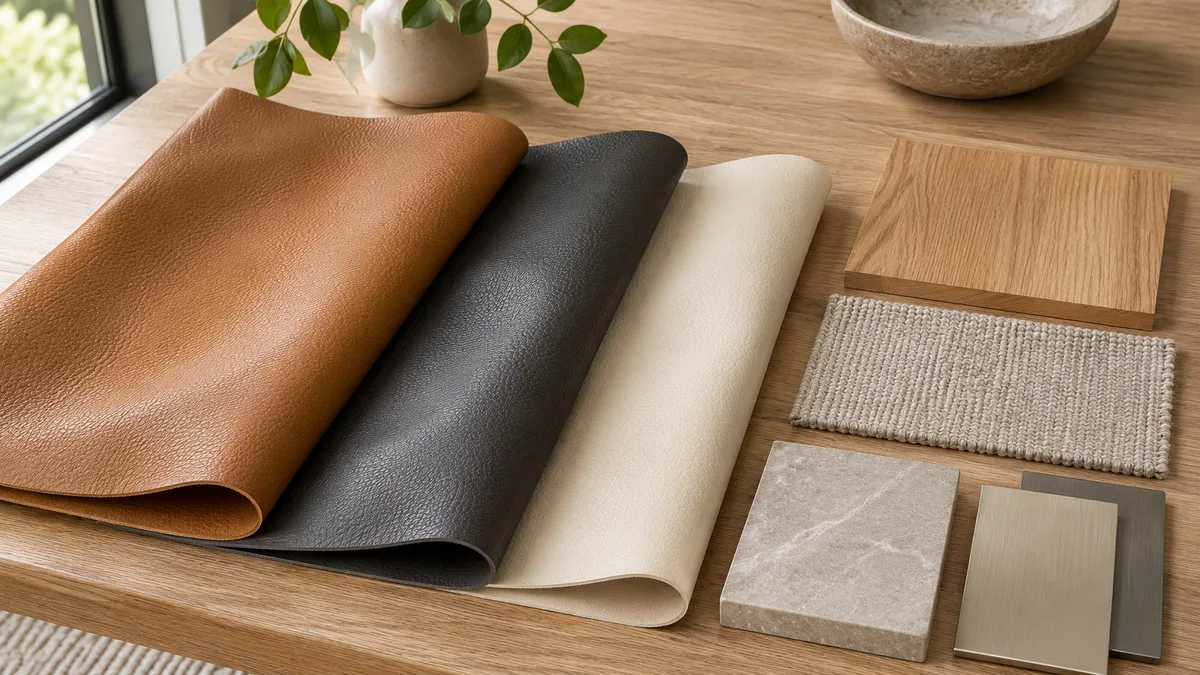

PU leather is made by coating a fabric base with polyurethane, adding a colour coat, and pressing a leather-like grain into the surface before a thin protective topcoat is applied. The base is usually a woven or non-woven polyester or cotton fabric, and the polyurethane is bonded to it with an adhesive layer and cured with heat and pressure. Fully synthetic PU contains no animal material, while bicast PU puts the same coating on a split of real hide.
Table of Contents
Key takeaways
- PU leather is made in five steps: prepare the base fabric, apply the polyurethane with an adhesive, add the colour coat, cure it with heat and pressure, and add the grain.
- The grain is either embossed with a heated roller or cast on textured release paper that is peeled away after curing.
- Fully synthetic PU uses a fabric base and is generally vegan; bicast PU coats a split of real hide, so it is not.
- PVC leather needs plasticisers to stay soft, and bonded leather is shredded leather scraps held together with a binder.
- Ask suppliers whether DMF solvent was used and whether the material is certified to OEKO-TEX Standard 100.
The layers in a sheet of PU leather
A sheet of PU leather has four layers: a textile base, an adhesive layer, the coloured polyurethane layer and a grained topcoat. Read from the bottom up, they are:
- Textile substrate: a woven or non-woven fabric backing, typically polyester or a cotton blend, which gives the sheet its strength.
- Adhesive layer: a bonding coat that fixes the polyurethane to the base.
- Polyurethane layer: the coloured plastic film that gives PU leather its look and soft feel.
- Grain and topcoat: an embossed leather-like texture with a thin protective finish on top.
Standard PU is about 0.8 to 1.2 mm thick and uniform in colour and texture, which is why it looks the same from one end of a roll to the other.
How PU leather is made, step by step
PU leather is made by building plastic layers on a fabric base and then giving the surface a grain. The five basic steps are:
- Prepare the base fabric. A polyester, cotton or blended textile is chosen for the backing.
- Apply the polyurethane. The polyurethane coating is applied or laminated onto the base layer, with an adhesive layer bonding it to the fabric.
- Add the colour coat. A colour layer gives the material its final shade.
- Cure with heat and pressure. Heat and pressure bond the layers together.
- Add the texture. A leather-like grain is embossed into the surface with a heated roller, and a thin topcoat is added.
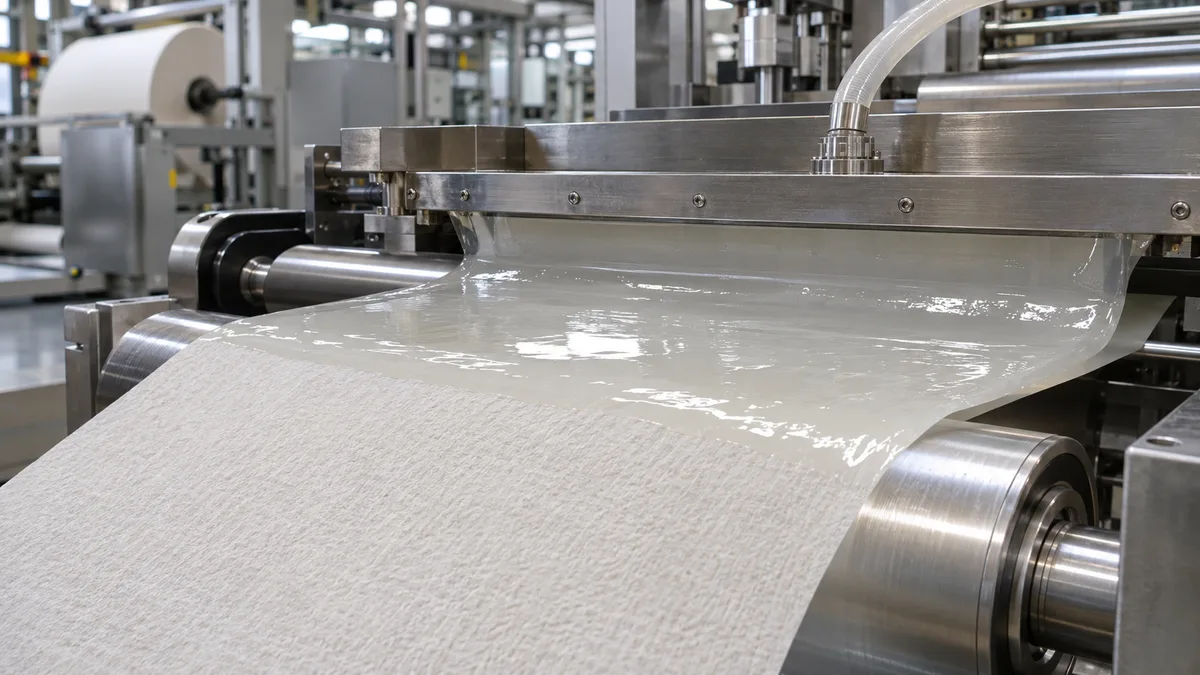
Another method is casting, used instead of embossing the grain after coating. Release paper with a leather texture is coated with several layers of plastic, the backing is laminated to it, and the material is cured. The release paper is then peeled away, leaving its grain in the surface, and it can often be used again.
Types of PU leather by base
PU leather comes in two main types, depending on what sits under the polyurethane: a fabric base or a split of real hide.
Fully synthetic PU has a fabric base and no animal extracts or by-products, so it is generally vegan. This type is common in residential furniture such as dining chairs.
Bicast leather, also called split-leather PU, has a split leather base with an embossed polyurethane or vinyl coating. It is made by building up plastic on casting paper, pressing the split leather into it, curing it and removing the paper. Because it contains hide, it no longer counts as vegan.
How PU compares with PVC and bonded leather
PU, PVC and bonded leather are made in different ways: PU is a polyurethane coat on fabric, PVC is a softened vinyl layer, and bonded leather is recycled leather fibre in a binder.
PVC leather, often sold as vinyl or leatherette, uses a soft PVC layer. The PVC needs a plasticiser to make it flexible and soft.
Bonded leather is made by a different process: leather scraps and fibres are mixed with a rubber or polyurethane binder and embossed to look like hide.
| Material | How it is made | Contains real leather? |
|---|---|---|
| Fully synthetic PU | Polyurethane coating on a woven or non-woven fabric base | No |
| Bicast (split-leather PU) | Polyurethane or vinyl coating on a split of real hide | Partly |
| PVC (vinyl) | Soft PVC layer made flexible with plasticisers | No |
| Bonded leather | Leather scraps and fibres in a rubber or polyurethane binder | Partly, in varying amounts |
| Genuine leather | Tanned animal hide | Yes |
What the making process means for wear
Because PU is a thin plastic film on fabric, wear starts at the surface, where heat, sunlight and skin oils break the polyurethane down over time.
When you compare offers, our guide on how to tell if a furniture deal is really worth it helps you weigh the price against the build.
Chemicals and certification
The main chemical concern in PU leather making is the solvent, so ask what was used and look for a recognised certificate. Dimethylformamide (DMF) is an organic solvent used in PU leather production, and it is classed as a Substance of Very High Concern under the EU REACH regulation.
OEKO-TEX Standard 100 sets limits for harmful residual chemicals in textiles, including synthetic leathers. A supplier who can show that certificate, and say whether DMF was used, gives you a clearer picture than a label that only says “eco”.
PU is made from petrochemicals and is not biodegradable, so it adds to plastic waste when it is thrown away. That is a reason to choose a grade that will last in the piece you are buying.
Where PU leather is used
PU leather is widely used in home and commercial furniture, such as dining chairs and commercial seating. When you choose a seat, the filling matters as much as the cover, and our guide to filled sofa cushions explains the options. Mixing a smooth PU piece with wood, linen or wool is one of several decor elements that lift a room.
Common questions
Is PU leather made of plastic?
Yes. The surface is polyurethane, a plastic made from petrochemicals, laid over a fabric base. Only bicast PU has real hide under the coating.
What is release paper in PU leather making?
Release paper is a textured paper that the plastic layers are built on during casting. After curing it is peeled away, leaving its grain pattern in the PU surface, and it can often be reused.
What is DMF, and should I worry about it?
DMF (dimethylformamide) is a solvent used in some PU leather production, and the EU lists it as a Substance of Very High Concern. Ask the supplier whether it was used, and look for OEKO-TEX Standard 100 certification.
Is bicast leather the same as PU leather?
Not quite. Bicast uses the same polyurethane coating, but on a split of real hide instead of fabric. That makes it partly leather and not vegan.